
First, the disclaimer. This article is a part of Dee’s World and does NOT in any way reflect the opinions of my employer. It is all my thoughts on a Saturday afternoon.
Now on with the story.
As an IT Consultant who has been using the term “workplace” for over 30 years and who started the Digital Workplace Consulting practice at Gartner (with my friend NM), I understand that the term “Knowledge Worker” has long gone out of vogue.
In my current job at ISG, the news is all abuzz with AI and its impact on everything.
I believe the term “Knowledge Worker” still applies as I am the first to admit that I have no carpentry, plumbing, masonry, or other “hands-on” skills. My electrical skills are probably dangerous at best. So, I am a knowledge worker cause that is mainly all I can sell. My knowledge. And yes, for you purists, I work in an “unstructured” manner, which is fine for my ADHD. And furthermore, many of you who actually know me believe me to be “organized.” Ha. I am the first to admit that I used tools in my job - a lot of them - cause I am so unorganized. The tools provide the facade of being organized. Tools take me from completely bouncing between topics at 1,000 miles per hour to capturing my thoughts and organizing them for me.
So it is with trepidation that I even write this article. I think AI is on a similar path as transistors were with Moore’s Law except AI is on a hyperbolic Moore’s Law. call it Moore’s Law Squared.
Personally, as a 60-something-year-old man, I love what is becoming of AI. However, when I (am forced to) retire in five to ten years, I fear my type of job will not be a viable occupation.
So since there is no time to waste, here’s my latest Dee’s World thought.
The Looming AI Revolution and the Knowledge Worker's Dilemma
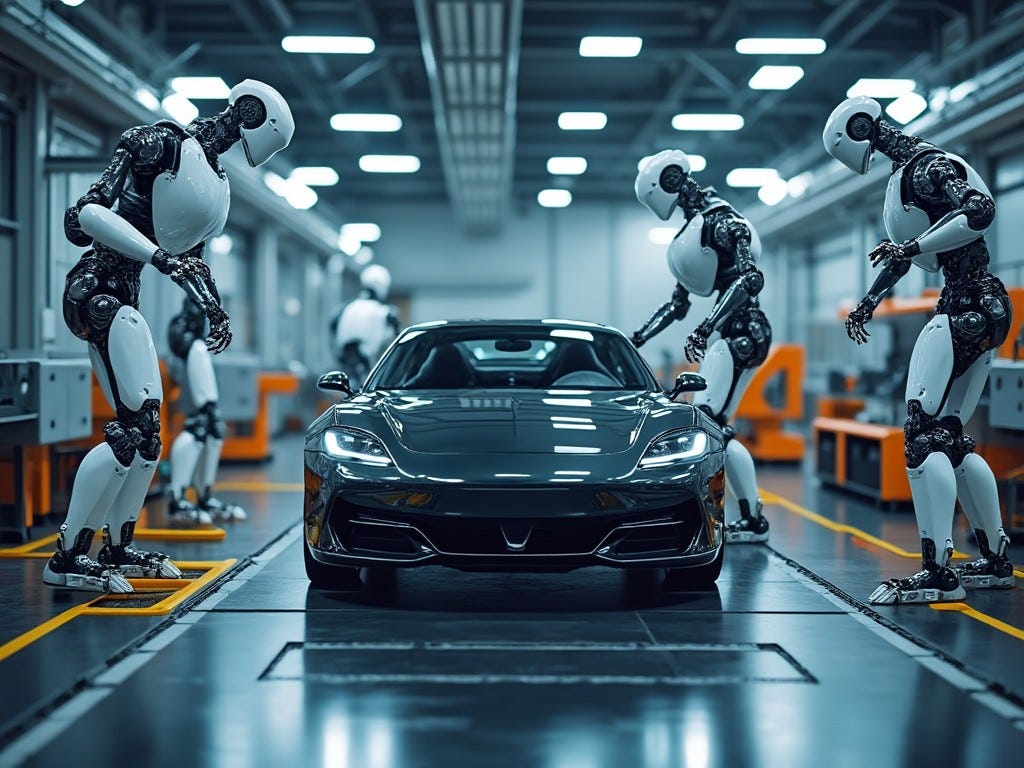
In the industrial age, factory workers felt the ground shake beneath their feet as robots began to roll onto the production floor. The automation of repetitive, manual tasks transformed factories, leading to widespread fear and uncertainty among blue-collar workers about their future employability. Fast forward to today, and we see a parallel narrative unfolding in the digital realm.
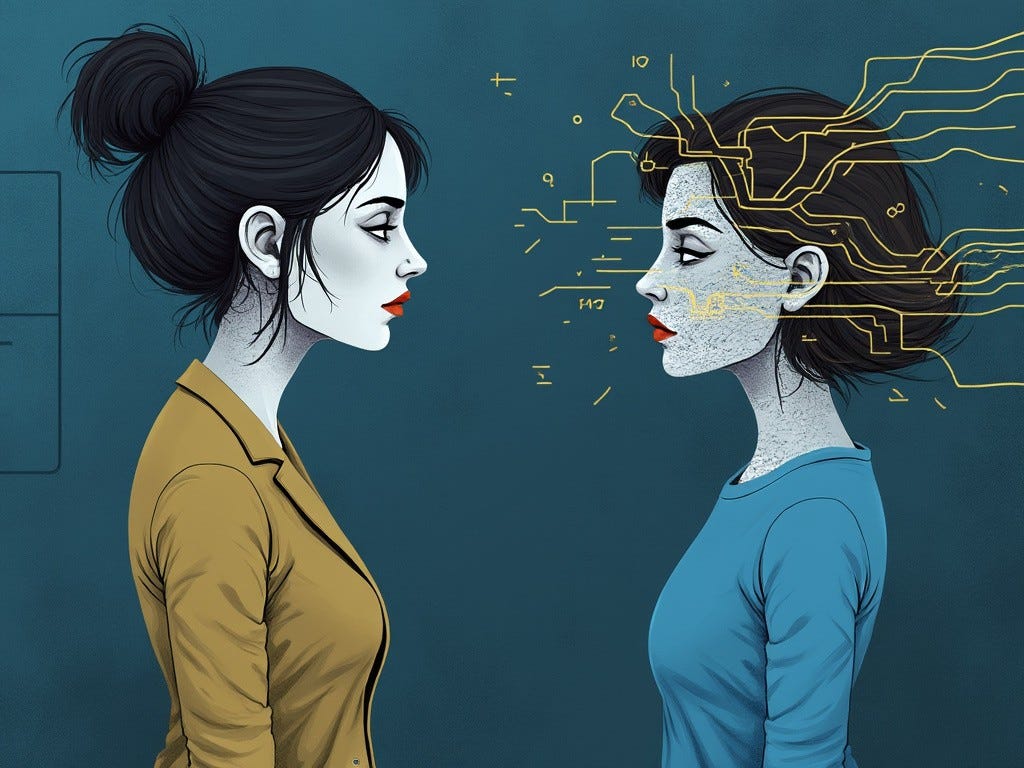
As AI advances, knowledge workers are now facing their own version of this industrial fear. The Shift from Manual to Intellectual Automation.
Dee's World: The Looming AI Revolution and the Knowledge Worker's Dilemma
In the industrial age, factory workers felt the ground shake beneath their feet as robots began to roll onto the production floor. The automation of repetitive, manual tasks transformed factories, leading to widespread fear and uncertainty among blue-collar workers about their future employability. Fast forward to today, and we see a parallel narrative unfolding in the digital realm. As AI advances, knowledge workers are now facing their own version of this industrial fear.
The Shift from Manual to Intellectual Automation
While robots primarily threatened jobs that involved physical labor, artificial intelligence poses a challenge to the cognitive tasks typically associated with white-collar professions. The rise of generative AI, like ChatGPT, can automate tasks such as writing reports, coding, designing, and even complex decision-making processes. According to ISG, advances in generative AI are expected to significantly increase the productivity of knowledge workers by automating routine tasks, allowing for more focus on complex problem-solving and creative endeavors .
The Psychological Impact on Knowledge Workers
The fear among knowledge workers is palpable. A CNBC SurveyMonkey Workforce survey from early this year found a direct correlation between the use of AI and increased job security worries among employees . This fear isn't just about job loss but also about the devaluation of their skills. Just as machine operators had to learn to operate or program robots, knowledge workers will need to adapt, learning how to work alongside or manage AI systems.
Adaptation and Reskilling
The narrative isn't all doom and gloom, however. Like the factory workers before them, knowledge workers are not powerless. The introduction of AI into the workplace mandates a shift towards roles that require uniquely human skills. Emotional intelligence, creativity, strategic thinking, and complex problem-solving remain domains where AI struggles. ISG reports that 60% to 70% of employees' time in knowledge work could be automated, suggesting a significant transformation in job roles .
The Role of Education and Policy
Education systems and policy makers have a critical role to play. There needs to be an increased emphasis on developing skills that complement AI:
Lifelong Learning: Continuous education to keep up with technological advancements.
Soft Skills Development: Focusing on skills where humans outperform AI, like empathy and leadership.
AI Ethics and Policy: Crafting policies that ensure AI development is ethical and considers job displacement's socio-economic impacts.
Action Plan for Knowledge Workers
Here's a proactive approach for knowledge workers to stay ahead in the AI era:
Stay Informed: Regularly update yourself on AI trends and technologies within your industry. Knowledge is power when preparing for change.
Skill Diversification: Invest in learning new skills, especially in areas like AI management, data analysis, and creative problem-solving. Platforms like Coursera, Udemy, or LinkedIn Learning can be invaluable.
Leverage AI as a Tool: Instead of fearing AI, learn to use it. AI can be a powerful ally in increasing efficiency and enhancing creative output. Understand its limitations and how to integrate it into your workflow.
Networking and Community Building: Engage with communities both within and outside your field. Networking can lead to new opportunities and insights into how others are adapting to AI.
Embrace Flexibility: Be open to career pivots. The skills you have now might be applicable in unexpected ways or in emerging fields.
Advocate for AI Ethics: Participate in discussions about AI's ethical use. Your voice can influence how AI is integrated into workplaces to benefit rather than displace workers.
Prepare for Leadership Roles: As AI handles more routine tasks, leadership, oversight, and human-centric roles will gain importance. Position yourself for these opportunities.

The automation of knowledge work by AI is not just a technological shift but a societal one. It beckons a reevaluation of what it means to work, learn, and contribute in an increasingly automated world. Knowledge workers, much like factory workers of the past, must navigate this change with resilience, adapting not just to survive but to thrive in an AI-augmented future. The fear is real, but with proactive steps, the opportunities for growth and innovation can be just as tangible.
As always, No AI was harmed in the making of this article.