
This week’s verified federal developments show agencies shifting from broad policy to concrete, risk-based execution as AI accelerates both threats and opportunities. The strongest theme is prioritization: doing the right work on the vulnerabilities, architectures, and workforce investments that move mission risk the most. Content is organized around the six PAVE pillars with clear executive impacts on budgets, risk, compliance, and outcomes.
Policy Direction & Mission Alignment
In mid-June the White House issued National Security Presidential Memorandum 12, updating governance for National Security Systems cybersecurity. It builds directly on the June 2 Executive Order on Promoting Advanced Artificial Intelligence Innovation and Security. The consistent signal to agencies is to align investments and risk decisions with AI-era threats and to prioritize cyber defense of both NSS and civilian systems as a core mission outcome. This sits at the intersection of mission alignment, policy and compliance, and security and risk pillars.
Key Executive Impact: Agencies should expect tighter scrutiny on how AI-related IT investments support national security and civilian mission outcomes. Budget and architecture decisions will need clearer traceability to these top-level directives.
Security Prioritization & Cloud Compliance
CISA’s Binding Operational Directive 26-04 (June 10) is the most actionable release of the week. It replaces older vulnerability remediation directives with a four-criteria risk model: asset exposure, Known Exploited Vulnerabilities status, exploit automation potential, and post-exploitation technical impact. In highest-risk cases agencies must also perform forensic triage. The directive explicitly notes that AI tools are shrinking defender response windows, so smarter prioritization is required.
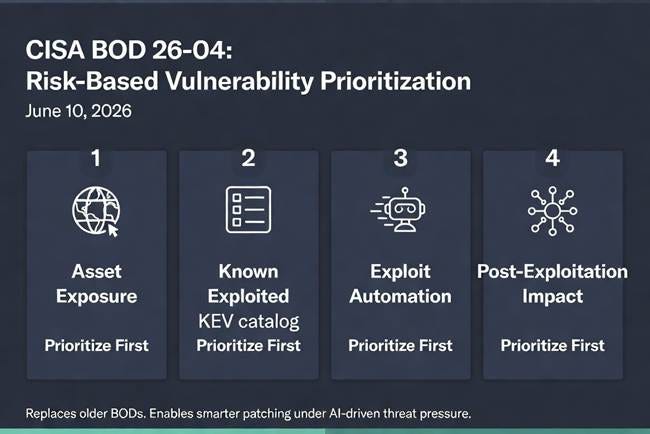
Figure 1: CISA BOD 26-04 four risk criteria for prioritizing vulnerability remediation.
FedRAMP responded quickly. On June 16 the program office accelerated mandatory adoption of updated Vulnerability Detection and Response rules for all FedRAMP cloud offerings to December 7, 2026. This compresses previous timelines and directly affects how cloud providers and consuming agencies staff continuous monitoring, vulnerability management, and architecture decisions.
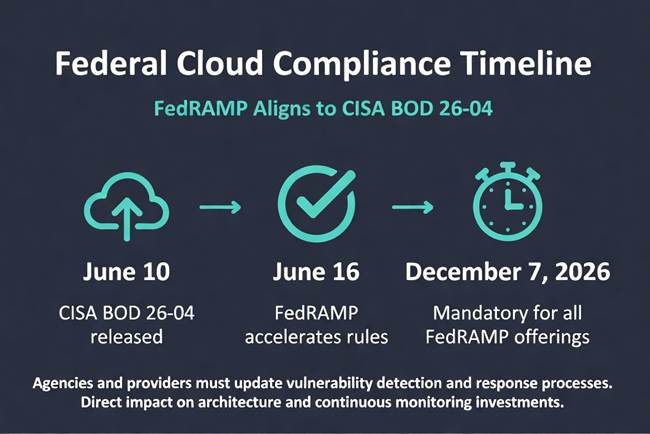
Figure 2: FedRAMP alignment timeline to CISA BOD 26-04.
Key Executive Impact: Agencies using FedRAMP services should budget for accelerated process updates and potential architecture changes in cloud environments. Security and cloud teams will need coordinated roadmaps.
Technical Viability & Architecture
NIST released two important technical signals the week of June 9–12. Working drafts update Personal Identity Verification (PIV) standards for post-quantum cryptography, giving agencies an early planning signal for identity and access management migration. The same period brought a mathematical proof supporting continuous monitor-and-update security models specifically for AI systems, strengthening the technical case for ongoing assurance rather than point-in-time assessments.
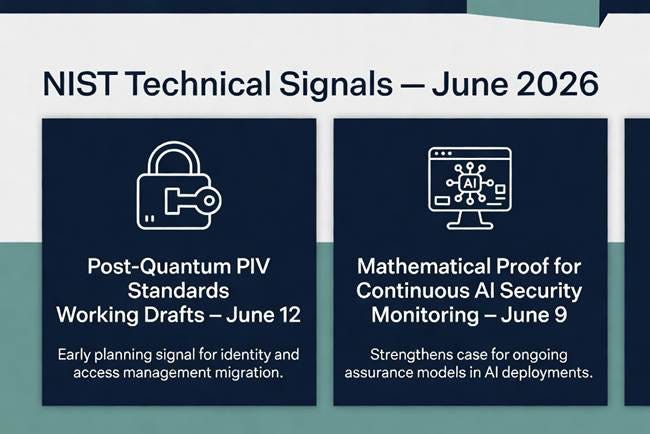
Figure 3: NIST technical signals for post-quantum identity and AI security monitoring.
Key Executive Impact: Architecture and security teams should begin inventorying PIV-dependent systems and assessing current AI monitoring capabilities against emerging continuous assurance expectations.
Workforce & Human Systems Integration
The GSA AI Guide for Government continues to emphasize practical workforce development. Key themes include identifying skill gaps and building effective AI teams, providing training plus institutional support from security, legal, and acquisition offices, and embedding human oversight and integration models from the start. The guide treats people and process as core to AI mission success rather than secondary to the technology itself.
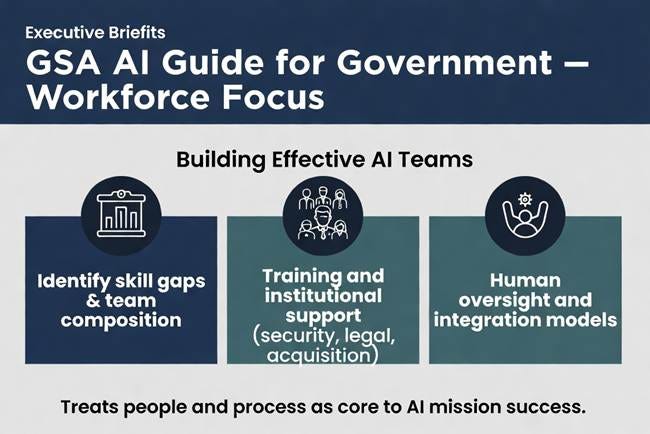
Figure 4: GSA AI Guide workforce development pillars.
Key Executive Impact: IT and program leaders should treat AI team composition, training budgets, and cross-functional governance as first-order investment decisions, not after-the-fact considerations.
Integrated View Across Pillars
The week demonstrates coherent movement: top-level policy (mission alignment and compliance) is driving risk-based security directives, which in turn accelerate cloud and technical architecture requirements, while workforce guidance reminds leaders that execution depends on people and process. Agencies that align budgets, roadmaps, and governance across these pillars will move faster and with lower risk than those treating each area in isolation.
Primary Sources
• CISA Binding Operational Directive 26-04 and supporting materials (June 10, 2026)
• FedRAMP Public Notice NTC-0014 (June 16, 2026)
• White House National Security Presidential Memorandum 12 and related AI Executive Order fact sheets (June 2026)
• NIST news updates on PIV post-quantum drafts and AI security monitoring proof (June 9–12, 2026)
• GSA AI Guide for Government, AI Center of Excellence (content current as of June 23, 2026)
• CISA Known Exploited Vulnerabilities catalog updates (mid-June 2026)
Disclaimer: The Information Exchange delivers verified public-source intelligence for executive decision-makers. All information is from reputable, publicly available sources. Every effort is made to keep details accurate as of publication time, but readers should always confirm time-sensitive items such as policy changes, budget figures, and timelines with official documents and briefings. Always validate with primary sources before action. This content does not constitute legal, investment, procurement, security, compliance, or technical advice.
© 2026 Metora Solutions LLC. All rights reserved. HUBZone and Service Disabled Veteran Owned Small Business.


